


Game, 3D & Coding
Secret Project (Prototype, WIP):

No Ordinary Sun - Unreal Engine 5.6
A "penguin-sledder" prototype. Snowboard-esque movement mechanics, authoritarian bipedal birds and ominous vibes.
This solo-developed, 3D "vertical game slice" showcases my extensive experience in Unreal Engine 5's pipelines and functionality, from character creation, level design, state-machine-based animation, blueprint-based coding, 3D modelling and geometry node systems, PBR texturing workflows, world-space texturing, procedural content generation systems, kit-bashing and more.
Click here for a broad overview of the project.
Click here to download and play the game for free! (1.3GB)
Showcase Video:


Hoot - Unreal Engine 5.5
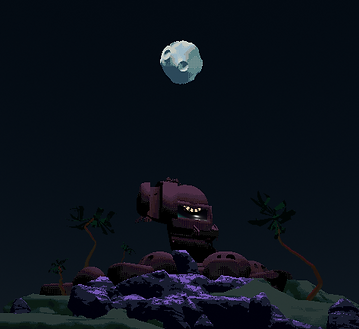
Space invaders for owls. First Unreal Engine project. An experiment with pre-rendered 2D sprites using a pixel-art shader and a dark, moonlit bruise-punk aesthetic. Levels generated randomly by spawning environment sprites upon one another.




CyberDoof - DoofDuck & Friends - DJs in Space
Blender Geometry Nodes - MagicaVoxel pipeline.
Created a bunch of 3D flora and fungal voxel assets for use in constructing levels for CyberDoof's 3rd public event.


Coding
Grains: Succession II - Falling Sand Music Visualiser (Java p5)
Click in the top left corner to run the song and watch the simulation evolve!
Click anywhere on the screen to spawn your own sand.
University Java p5 Creative Coding Project.
Falling sand simulations, like similar cellular automata, function by creating a two dimensional array of co-ordinate locations representing the screen space, and applying a for loop to scan through the array (from bottom to top) and determine the behaviour of each cell based on a set of simple rules. A cell can be empty (value = 0), or filled (value < 0), and different values can be tied to different behaviours (Custom sands).
This simulation also has sand behaviours mapped to music-driven values. The music data was extracted using a machine learning algorithm, and these values drive things such as sand spawn rate, sand spawn type, plant growth and more.
The music is Grains: Succession II, a track that explores the cohesion and conflict between humanity and the natural world. As the track progresses, different paradigms of the simulation emerge. The end is fire.
Other Stuff:


